From Potential to Impact

I first learned about plant-based dye-sensitized solar cells (DSSCs) in my Science Research and Design program at school. Hearing about solar cells that were flexible, inexpensive, colorful, and used natural resources, I immediately started thinking that this sounded like a great startup idea. This summer, I got to test it out, by completing an independent project exploring how plant-based solar cells might find real-world applications.
Through building, testing, comparing technologies, and examining economics, I am investigating the possibilities (and limitations) of turning an existing technology into a useful innovation.
01 — Imagining Possibilities
What could plant-based solar cells make possible?
I began by imagining applications for this technology, no matter how unrealistic, from energy-generating surfaces to wearable devices to a watch powered by berries.
But, could any of these ideas actually work in the real world?
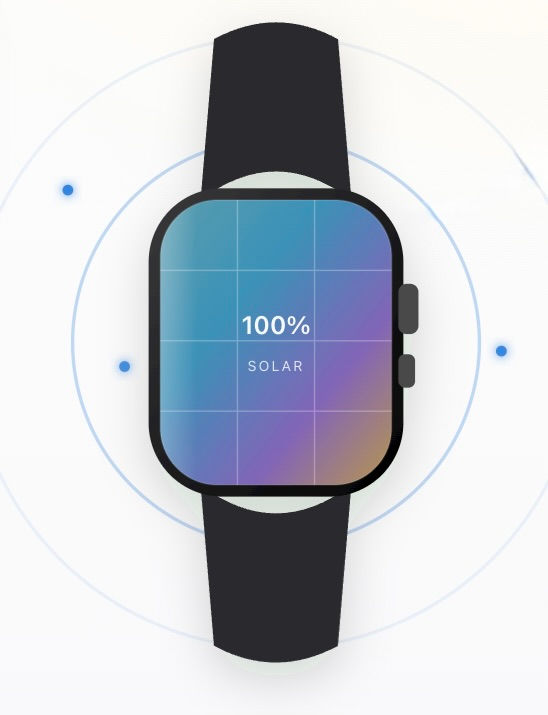
AI generated concept visualization — not a working prototype.
02 — Building the Solar Cells

I began by building three dye-sensitized solar cells (DSSCs) using pigments extracted from blackberries. After assembling the cells, I connected them in series and experimented with their electrical output, including charging a supercapacitor. These early experiments gave me a working proof of concept and a starting point for investigating whether the technology could have innovative applications and eventually become commercialized.

03 — Behind the Experiment
A behind-the-scenes look at the trial, error, and chaos of building and testing solar cells. The electrical readings changed so slowly that I literally used a time-lapse camera to capture the process. However, watching the multimeter register electricity created from a blackberry was incredible.

04 — Testing Assumptions
Building a working solar cell was exciting, but it raised a bigger question: Could this technology actually compete with existing alternatives? I tested the cells under different lighting conditions and began comparing their electrical output and potential economics with conventional silicon solar panels.
The results challenged my initial assumptions. I realized that demonstrating a technology was possible wasn't the same as proving it was practical. That became the turning point of my project.
Instead of asking how plant-based solar cells could replace conventional solar panels, I began exploring where their unique properties might make them useful in different settings.

05 — Seeking new perspectives
Building and testing solar cells was only part of the challenge. I also wanted to understand what it would take for an emerging technology to become something people could actually use.
Through conversations with my mentor and stakeholders, I explored the practical challenges of bringing new technologies into the real world. I also studied Technology Entrepreneurship: Lab to Market through HarvardX, which encouraged me to think about innovation from both scientific and entrepreneurial perspectives. I particularly applied the concepts of value creation and value capture.
I began asking new questions: What if efficiency wasn't the only way to think about these cells? What if the tiny amount of energy it generated was enough to power an intermittent sensor? What if the value was in connecting them in an intelligent network? This is where I am heading next. I was learning that making something work is only the beginning. Making it useful is an entirely different challenge.
